
The Innovation Lab at Aleppo University
Advancing Humanitarian Innovation, Digital Manufacturing, and Youth-Led Recovery in Syria
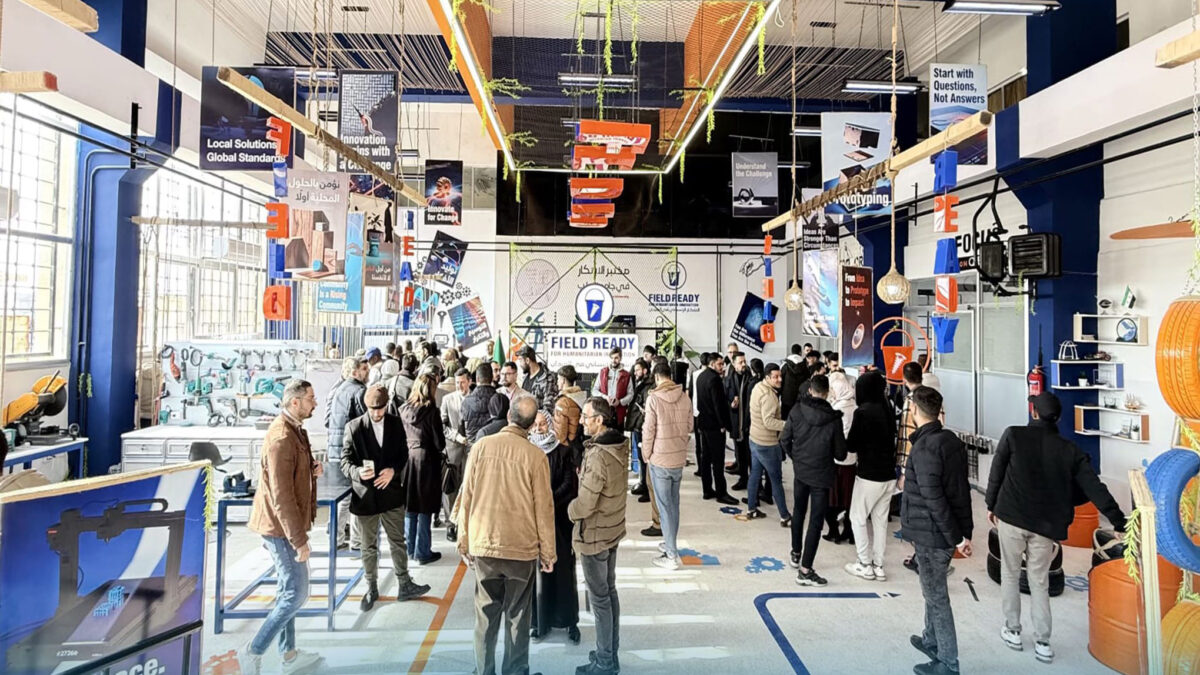
In the heart of Aleppo, one of Syria’s most historically significant yet conflict-affected cities, Field Ready for Humanitarian Innovation has established the Innovation Lab at Aleppo University. Designed as a makerspace and Fab Lab, the Lab serves as a platform for transforming knowledge into practical solutions that contribute to recovery, resilience, and sustainable development.
The Innovation Lab is not simply a technical workshop. It is a structured environment where education, digital technology, and applied manufacturing converge to empower young Syrians to actively participate in rebuilding their communities.
Purpose and Strategic Vision
The Innovation Lab was created to strengthen local capacity for innovation in a post-conflict context. Its core objectives are to:
- Enhance technical and digital skills among university students and youth innovators
- Promote locally driven problem-solving for reconstruction and humanitarian challenges
- Bridge academic learning with real-world application
- Support early-stage innovation and entrepreneurial incubation
In environments recovering from prolonged crisis, reconstruction requires more than infrastructure rehabilitation—it requires knowledge transfer, technical empowerment, and local production capacity. The Lab responds to this need by embedding innovation tools directly within the university ecosystem.
An Integrated Education–Technology–Manufacturing Nexus
The Innovation Lab at Aleppo University operates at the nexus of education, digital technology, and advanced manufacturing. It transforms academic learning into tangible prototypes and scalable solutions by embedding fabrication tools directly within the university environment.
This integrated model shortens the distance between knowledge, production, and impact—an approach increasingly recognized in global innovation ecosystems such as the MIT Fab Lab Network and leading university-based innovation hubs worldwide.
By connecting classroom learning with digital fabrication and applied manufacturing, the Lab enables students to move beyond theory and engage in hands-on problem solving. In fragile and post-conflict contexts, innovation cannot remain abstract. This model builds localized production capacity while empowering youth to design and manufacture solutions tailored to the realities of their own communities.
A Fully Equipped Makerspace / Fab Lab
The Innovation Lab follows an internationally recognized Fab Lab model, adapted to the Syrian context. It integrates advanced digital fabrication technologies with traditional workshop tools to create a comprehensive prototyping environment.
Digital Fabrication Equipment
The Lab is equipped with:
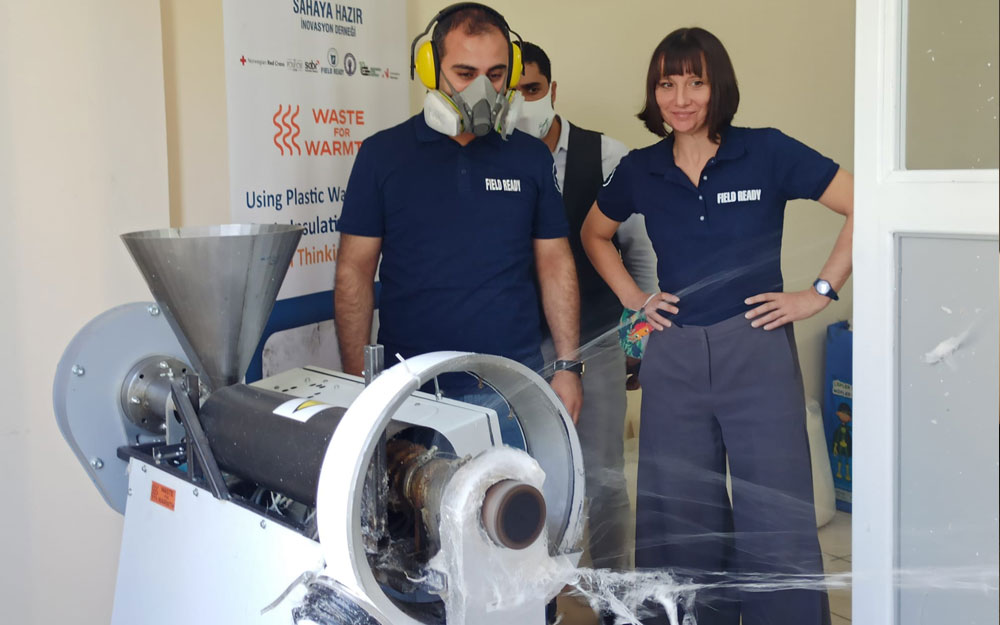
- 3D printers for rapid prototyping and small-scale production
- CNC machines (Computer Numerical Control) for precision cutting, milling, and mechanical fabrication
- Laser cutters for high-accuracy cutting and engraving of materials such as wood and acrylic
- Advanced CAD and digital design software, including Fusion 360
- High-performance computer workstations for modeling, simulation, and AI-supported design
These tools allow students to move efficiently from digital concept to physical prototype, supporting iterative testing and refinement.
Traditional Workshop Capabilities
Complementing digital technologies, the Lab includes:
- Manual fabrication tools
- Mechanical workbenches
- Basic electrical and assembly equipment
- Dedicated prototyping and experimentation space
The integration of digital and traditional tools ensures that solutions are not only innovative but also practical, adaptable, and locally maintainable.
Incubation and Youth Entrepreneurship
Beyond technical fabrication, the Innovation Lab includes workspace areas dedicated to incubating innovative businesses and early-stage initiatives. It provides:
- Collaborative working spaces for multidisciplinary teams
- Mentorship and technical supervision
- Structured design thinking methodologies
- Support for prototype refinement and validation
- Exposure to market-oriented thinking and local industry engagement
The Lab is open not only to Aleppo University students but also to youth innovators across the city, fostering a broader innovation ecosystem that connects academia, civil society, and industry.
This incubation component ensures that innovation does not remain academic—it evolves into social enterprises, humanitarian solutions, and locally rooted startups capable of contributing to Syria’s economic revitalization.
Humanitarian Innovation in Practice
Field Ready for Humanitarian Innovation operates on the principle that solutions should be designed with and for affected communities. The Innovation Lab in Aleppo embodies this philosophy by:
- Encouraging participatory problem identification
- Promoting ethical, context-sensitive technology use
- Supporting reconstruction-oriented innovation
- Aligning digital fabrication with humanitarian priorities
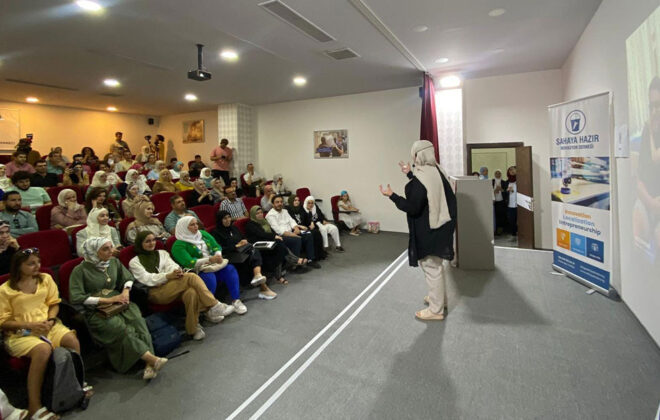
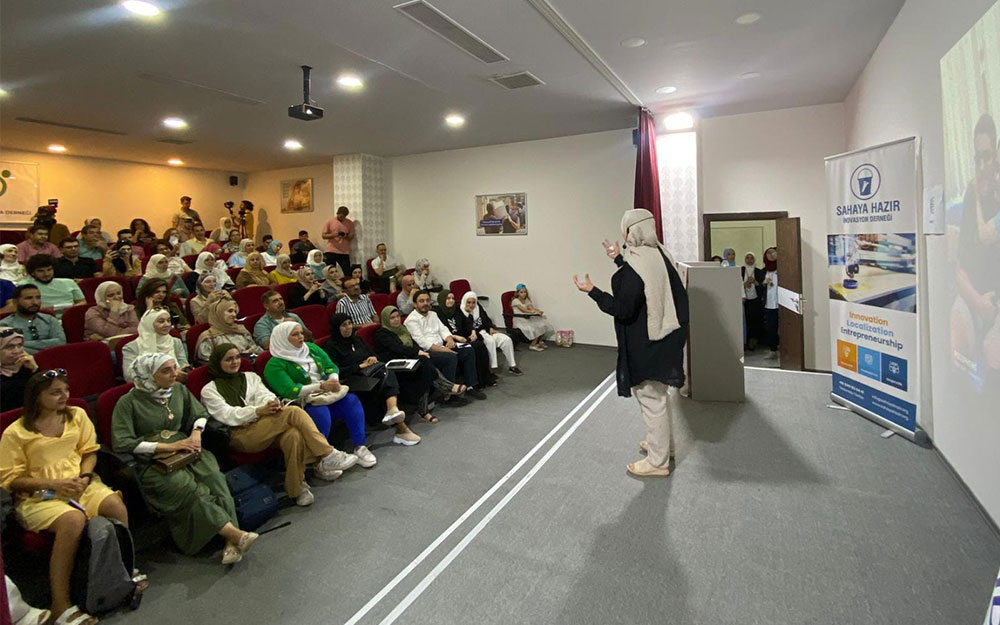
Recent activities have included digital design training for engineering students and innovation challenges focused on heritage preservation and reconstruction—demonstrating how emerging technologies can responsibly support cultural recovery and infrastructure rehabilitation.
Contributing to Local Recovery and Long-Term Resilience
The establishment of the Innovation Lab represents a strategic shift toward localized innovation and production capacity in Syria. Rather than relying solely on imported solutions, the Lab strengthens the ability of young Syrians to design, prototype, and potentially manufacture solutions domestically.
In doing so, it contributes to:
- Reducing dependency on external supply chains
- Building technical confidence among youth
- Strengthening university–industry linkages
- Encouraging evidence-based reconstruction practices
- Promoting sustainable, locally adaptable solutions
A Platform for the Future
In a city rebuilding both its infrastructure and its identity, the Innovation Lab at Aleppo University stands as a platform where technology meets responsibility and innovation meets resilience.
It is a space where young engineers, designers, and innovators can translate knowledge into action, prototype ideas that address real challenges, and contribute meaningfully to Syria’s recovery journey.
The Lab reflects a simple but powerful belief: sustainable recovery begins when communities are equipped not only to rebuild—but to innovate.